

Exploring the Extraordinary Within the Ordinary: An Interview with Sue Bushell
/
Yoga is less about mastering the poses and more about changing the way we see ourselves—and the world around us. Yoga is a tool for transformation.
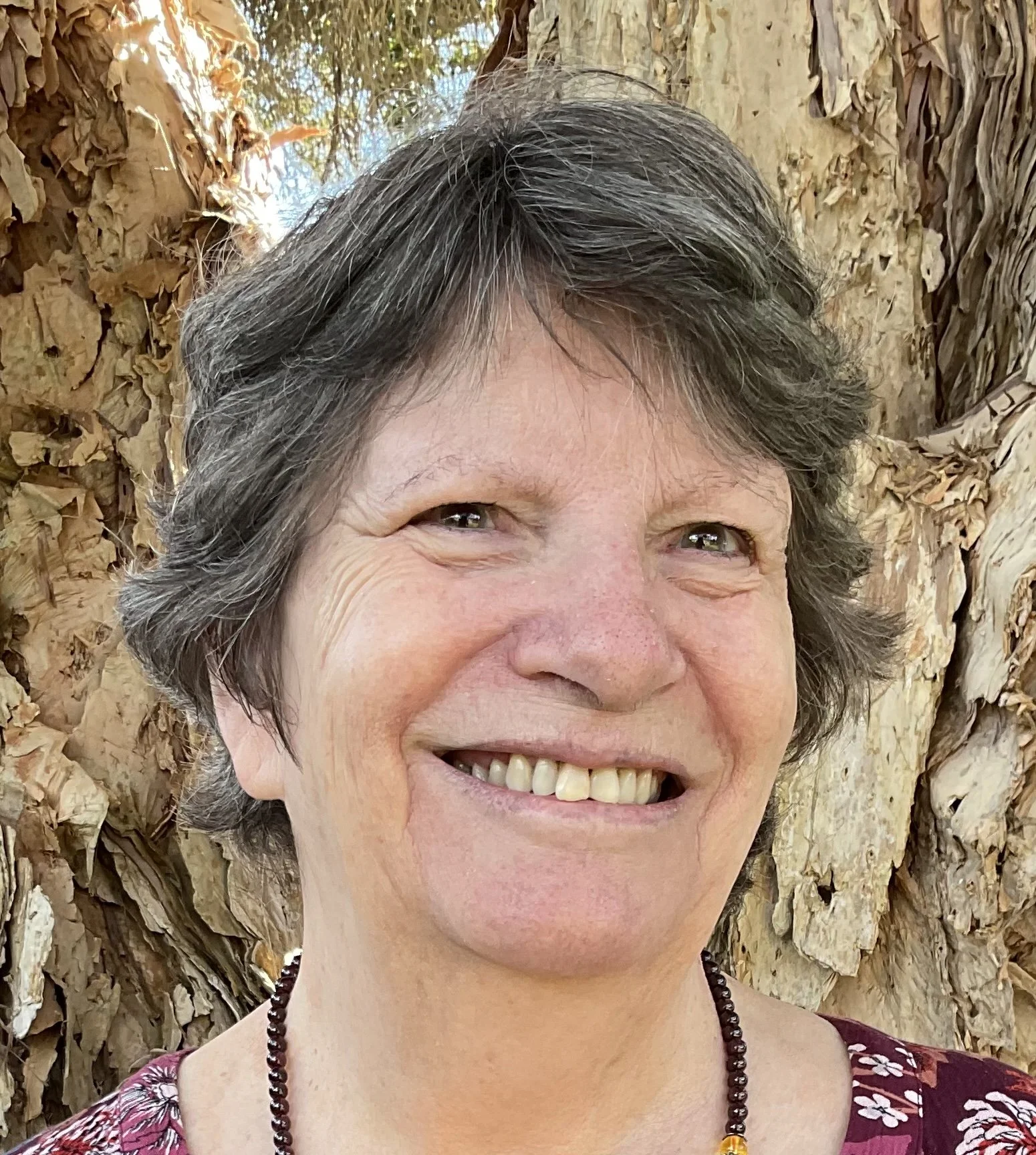
For Sue Bushell, an award-winning Australian journalist, author, and yoga and meditation teacher, yoga is a lifelong inquiry into who we are beneath the identities we construct. With more than 30 years of experience exploring yoga, meditation, and the wisdom traditions of India, Sue’s work invites us to look beyond the physical practice and discover how ancient teachings can illuminate our everyday lives.
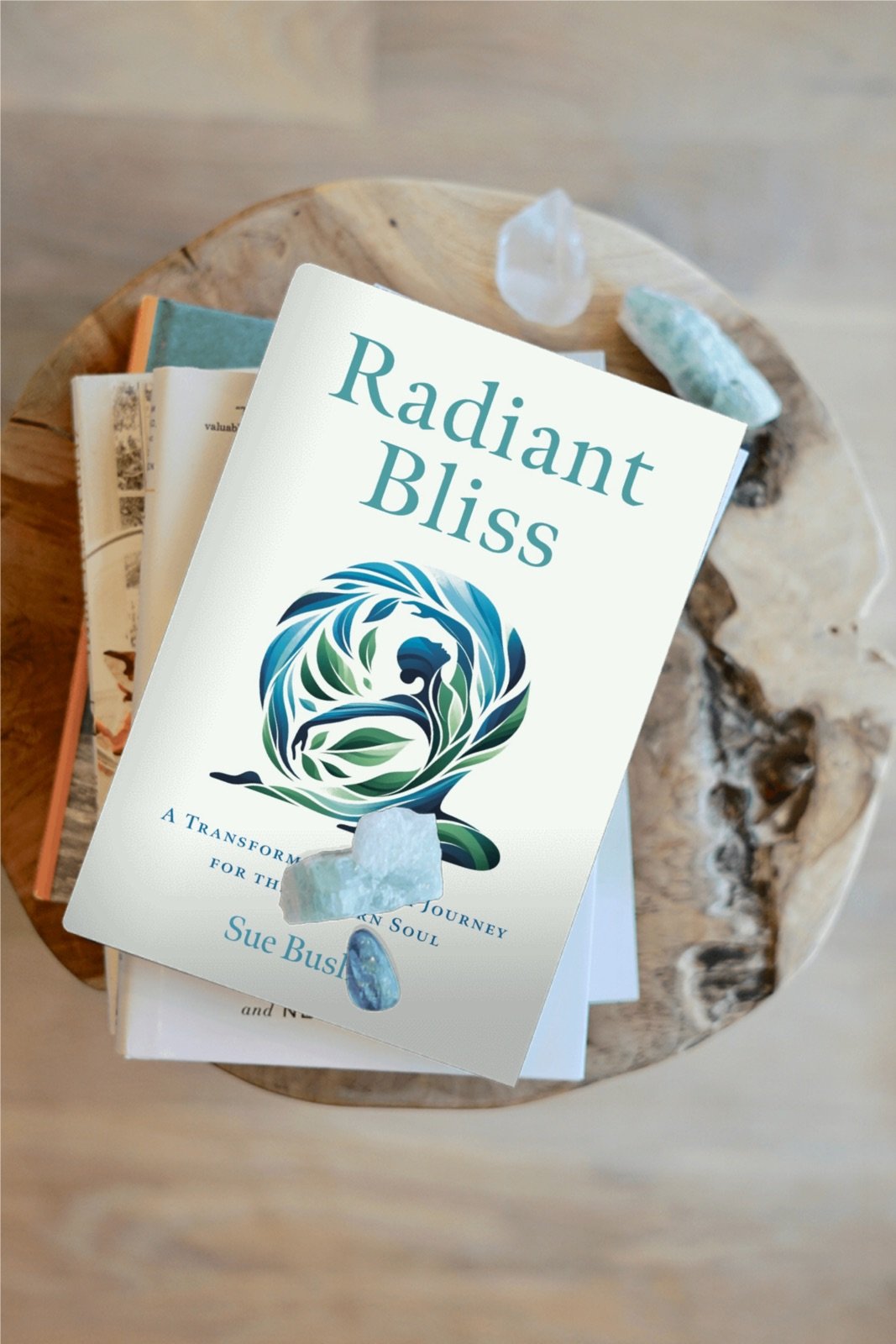
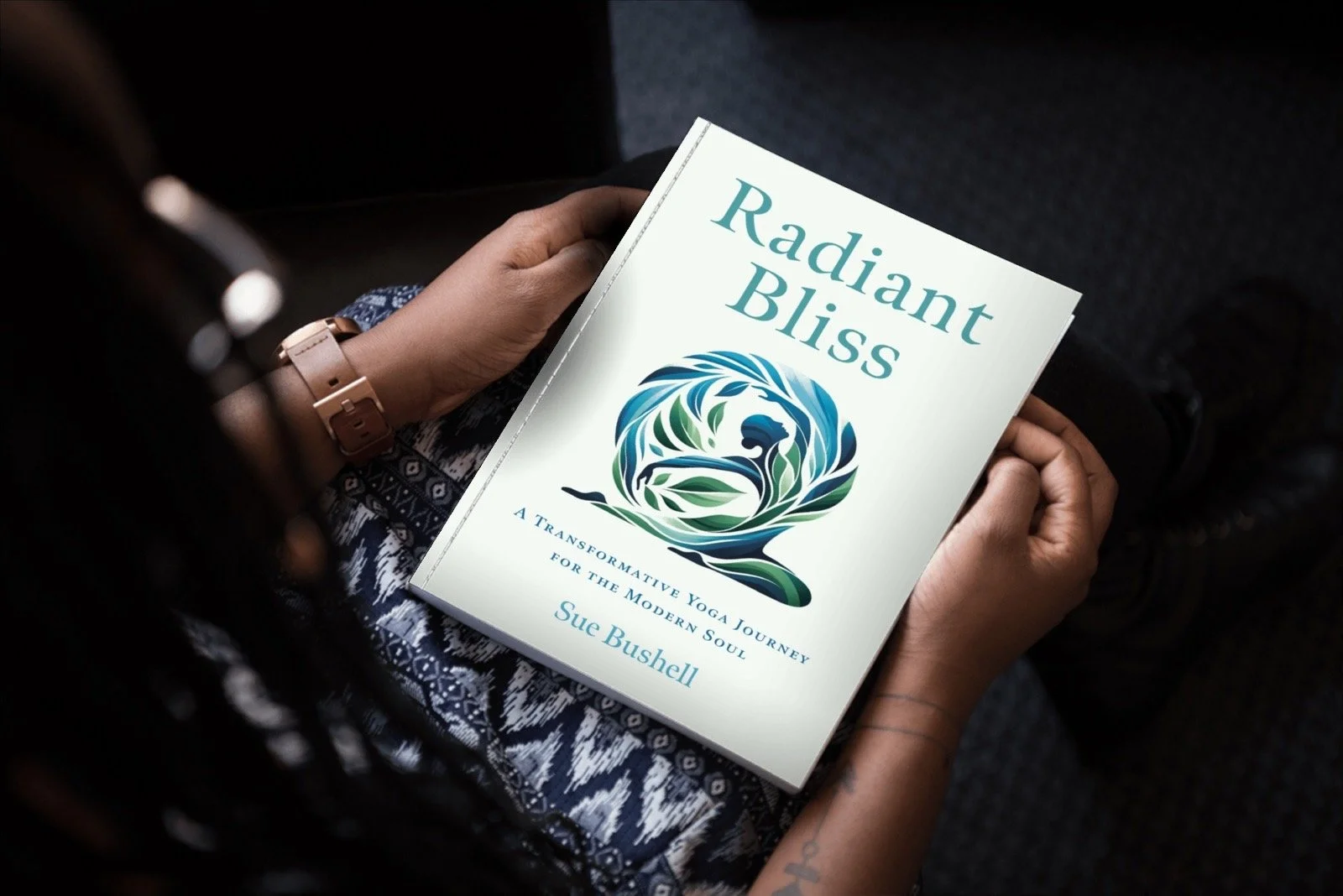
In her book Radiant Bliss: A Transformative Yoga Journey for the Modern Soul, Sue explores yoga as a way of living, more than just what happens on your mat. Her forthcoming book, The Myths Within, takes readers into the rich world of Hindu mythology, exploring how the stories of gods and goddesses can serve as mirrors for our own inner lives.
I was especially drawn to Sue’s perspective on finding the extraordinary within the ordinary. In a culture that often encourages us to strive for the next breakthrough, achievement, or transformation, her approach offers a different invitation: to slow down, pay attention, and recognize the wisdom already present in our lives.
In this interview, Sue shares how her yoga journey began, how meditation and contemplative practice shape her writing, what the relationship between Shiva and Shakti can teach us about wholeness, and where to begin if you're curious about yoga philosophy or Hindu mythology.
Keep reading for a thoughtful conversation about creativity, consciousness, and discovering the sacred in the everyday.
You’ve spent more than 30 years immersed in yoga, meditation, and wisdom traditions. How did your journey begin, and what first drew you toward exploring yoga beyond the physical postures?
My journey with yoga began more than 30 years ago, but I think the deeper journey began when I realised that yoga was asking questions I had been carrying for much of my life.
Who are we beneath the identities we construct? What remains when circumstances change, when certainty disappears, when life refuses to follow the script we have written for it?
The physical practice was a doorway, but I gradually discovered an extraordinary philosophical and contemplative tradition extending far beyond the mat.
Over the years, I have been fortunate to study with teachers from different traditions, including Dru Yoga, meditation and the non-dual teachings of Kashmir Shaivism. Each has illuminated another aspect of the same profound inquiry.
What continues to fascinate me is that yoga doesn’t simply offer techniques for becoming calmer, stronger or more flexible. At its deepest, it invites us to reconsider who we believe ourselves to be.
And after more than three decades, I still consider myself a beginner in the presence of that question.

Your first book, Radiant Bliss: A Transformative Yoga Journey for the Modern Soul, explores yoga as a way of living. What’s one teaching or idea from the book that you wish more people understood about yoga?
That yoga is not something we do for an hour. It is something we learn to live.
We have become accustomed to seeing yoga represented through beautiful postures, extraordinary flexibility and carefully curated images of serenity. Yet the ancient teachings offer something infinitely more interesting.
Yoga is present in how we speak to someone who irritates us. In whether we can recognise our own prejudices. In the way we respond to disappointment, uncertainty, ageing and loss.
The yamas and niyamas, the ethical foundations of yoga, are every bit as relevant to a difficult conversation or a social media exchange as they were to seekers thousands of years ago.
One of the ideas running through Radiant Bliss is that spiritual practice doesn’t require us to withdraw from ordinary life. Ordinary life is where the practice becomes real.
The yoga mat is a wonderful place to begin. But the real examination often begins when we roll it up.
Your forthcoming book, The Myths Within, explores Hindu gods and goddesses and what their stories reveal about our inner lives. What inspired you to write this book, and what do you hope readers discover through these ancient stories?
I have always loved stories. Perhaps that is inevitable after a career spent as a journalist, searching for the human meaning beneath events and appearances.
But Hindu mythology offers something quite different from the stories we ordinarily tell about ourselves.
Its gods and goddesses are magnificent, contradictory, compassionate, terrifying, playful and sometimes gloriously unreasonable. They inhabit a universe in which creation and destruction, wisdom and folly, devotion and desire are woven together.
I became increasingly fascinated by the possibility of reading these stories not only as sacred narratives, but also as mirrors of our inner lives.
We all know something of Shiva’s stillness and Kali’s ferocity, Saraswati’s wisdom and Ganesha’s capacity to help us confront obstacles. We recognise the battlefield of the Bhagavad Gita because, in one form or another, we have stood upon it ourselves.
I wanted to invite readers into these stories without diminishing their sacred significance or insisting on a single interpretation.
My hope is that someone might encounter an ancient myth and suddenly recognise something about their own fears, longings, contradictions or possibilities.
The stories are ancient. The questions they illuminate are astonishingly contemporary.
Can you share an example of a particular god, goddess, or myth that has been especially meaningful to you and why?
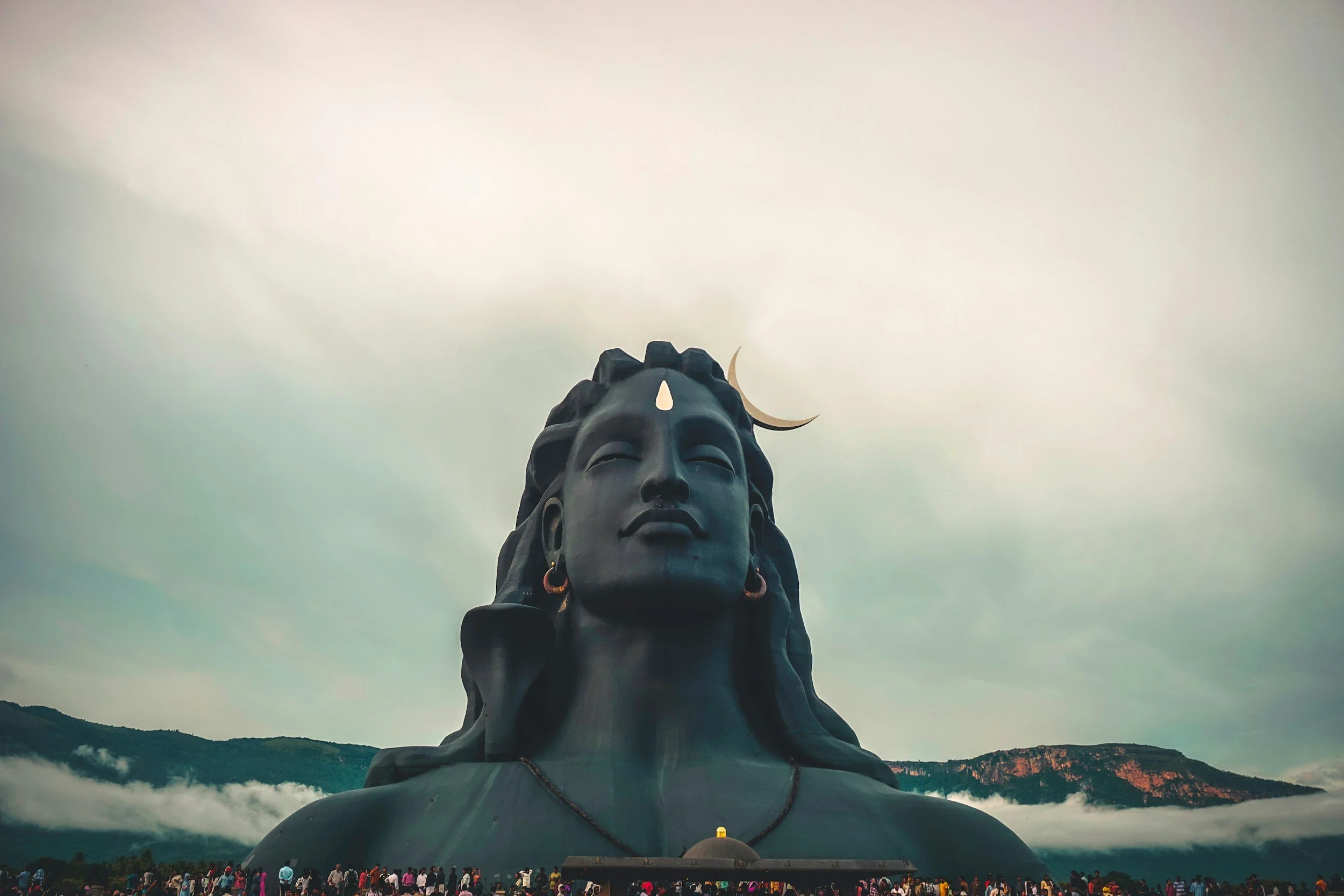
I find the relationship between Shiva and Shakti endlessly compelling.
Shiva represents pure awareness, the stillness that is not disturbed by the movement of experience. Shakti is the dynamic power of consciousness, the energy through which the universe manifests.
They are not ultimately separate.
One of the most beautiful expressions of this understanding is Ardhanarishvara, the form in which Shiva and Parvati share a single body.
It is a profound image of wholeness, reminding us that apparent opposites need not be enemies.
Stillness and movement. Silence and expression. Transcendence and everyday existence.
For me, this has become increasingly meaningful as my practice has matured. I am less interested now in escaping the world than in recognising the sacred within it.
The extraordinary thing about these teachings is that they don’t necessarily ask us to become someone else.
They invite us to recognise what has been present all along.
How does your own yoga or meditation practice influence the way you write? Do you have any rituals or practices that help you connect with your creativity?
My mornings begin with practice, long before the demands of the day begin to gather.
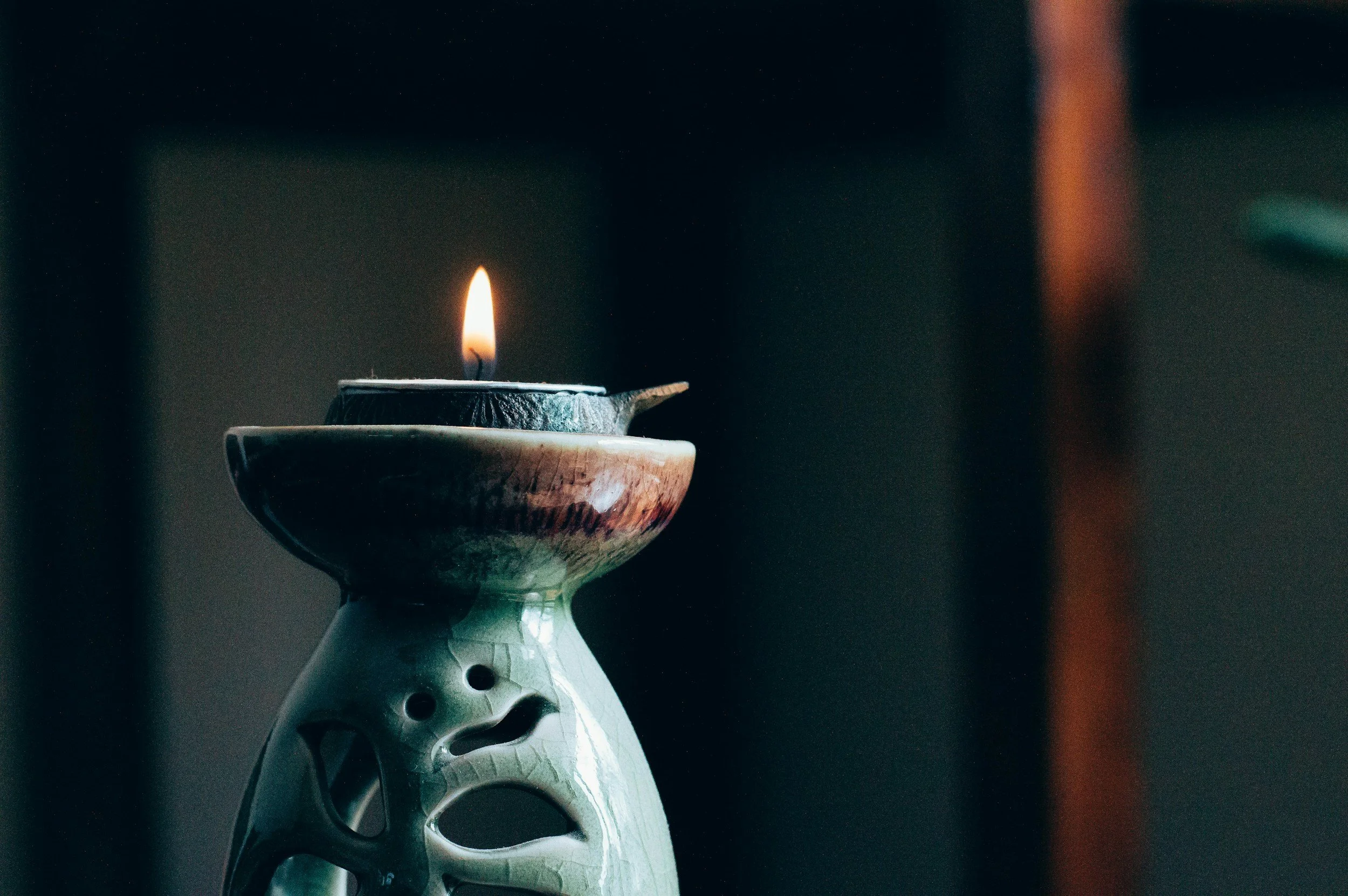
There is something deeply reassuring about the small rituals: lighting a diya, the steady flame of an oil lamp, chanting mantra, working with the breath, entering meditation.
These practices are not designed to make me a more productive writer. In fact, I think that would rather miss the point.
They remind me that there is a dimension of life beyond productivity altogether.
And yet, inevitably, they influence my writing.
Meditation teaches us to notice what is happening beneath the surface. Writing asks for much the same attentiveness. Both require patience, curiosity and a willingness to remain with uncertainty.
Sometimes an idea arrives during practice. Sometimes a sentence emerges unexpectedly later in the day. And sometimes nothing arrives at all.
I am learning to be comfortable with that, too.
There is a lovely paradox here: the less determined I am to extract something useful from silence, the more generously it seems to nourish everything else.

You also create contemplative books and guided journeys through your Mandala Sanctuary. Can you tell us more about this space and how these offerings complement your books?
The Mandala Sanctuary grew from a simple wish: to create a beautiful, welcoming place where people could explore the deeper dimensions of yoga without feeling they had to purchase something, subscribe to something or become someone different before entering.
It is a freely accessible digital sanctuary containing contemplative journeys, guided relaxation, meditation practices, philosophical explorations and encounters with sacred stories.
Visitors can explore the Bhagavad Gita, journey through the chakras, investigate the five elements, discover the wisdom of the yamas and niyamas, or simply rest in a guided Yoga Nidra.
There are also more experimental spaces where ancient teachings become invitations to personal reflection.
I wanted it to feel less like a conventional website and more like entering a quiet library with many intriguing doorways.
My books offer sustained journeys through particular subjects. The Sanctuary allows people to wander, explore, practise and return according to what they need in the moment.
There is no membership requirement and no email address demanded at the door.
Just enter.
What does finding the extraordinary within the ordinary mean to you personally? Are there any stories or memories that come to mind?
I think we sometimes make the mistake of imagining that spiritual experience must be dramatic.
We look for revelations, extraordinary states of consciousness, moments when the heavens seem to open.
And perhaps such experiences have their place.
But increasingly, I find myself drawn to something much quieter.
The first light entering a room. A bird calling before sunrise. The small flame of a diya trembling in the stillness of morning. The astonishing fact that we are here at all, conscious of this fleeting and mysterious existence.
None of these things requires anything to be added.
What changes is the quality of our attention.
There is a beautiful teaching in the Chandogya Upanishad in which salt dissolves into water. It can no longer be seen, yet its presence can be discovered throughout.
I return often to the spirit of that teaching.
Perhaps the sacred is not absent from ordinary life. Perhaps our attention is simply elsewhere.
For me, finding the extraordinary within the ordinary means becoming available to what is already here.
After so many years studying and practising yoga, what has surprised you most about your understanding of yoga?
How much less interested I have become in achievement.
When we begin a spiritual practice, it is easy to imagine a destination: greater peace, deeper meditation, perhaps even enlightenment.
We measure progress. We accumulate techniques. We become rather accomplished at being spiritual seekers.
And then, if we are fortunate, something begins to soften.
We discover that the desire to become a more advanced practitioner can itself become another expression of the ego.
I have experienced powerful states in meditation, but I have also learned that extraordinary experiences are not necessarily the measure of wisdom.
What matters more is how we live.
Are we becoming kinder? Less defensive? More capable of sitting with uncertainty? More willing to recognise the humanity of people whose views differ from our own?
And perhaps most surprisingly, can we begin to loosen our grip on the idea that we must always be improving ourselves?
After more than 30 years, yoga has become less about acquiring something and more about recognising what need not be acquired.
That is both wonderfully liberating and rather humbling.
For someone curious about yoga philosophy, meditation or Hindu mythology but unsure where to begin, what would you recommend?
I would begin with curiosity rather than ambition.
You don’t need to understand Sanskrit, master complicated postures or commit to an elaborate spiritual routine.
A few minutes of quiet attention each day can be a wonderful beginning. Sit comfortably, notice the breath, and observe how readily the mind wanders. Not as a failure, but as a discovery.
For philosophy, I would recommend the Bhagavad Gita. Eknath Easwaran’s translation is particularly approachable for contemporary readers. It introduces profound questions about action, duty, identity, devotion and freedom through the unforgettable image of a warrior standing between two armies.
Patanjali’s Yoga Sutras are another foundational text, although I think they benefit enormously from thoughtful commentary.
For mythology, I would encourage readers to approach the stories with both respect and imagination. They belong to living religious traditions, but they can also illuminate deeply human experiences.
Above all, don’t rush to collect teachings.
Choose one idea that resonates, live with it for a while, and notice what happens when it meets the reality of your everyday life.
A single teaching sincerely explored may be worth more than an entire bookshelf of wisdom left unopened.
What’s next for you and your writing? Are there any books, projects or ideas you’re especially excited to explore?
I seem to have reached a stage in life when ideas arrive rather more quickly than I can possibly bring them into the world!
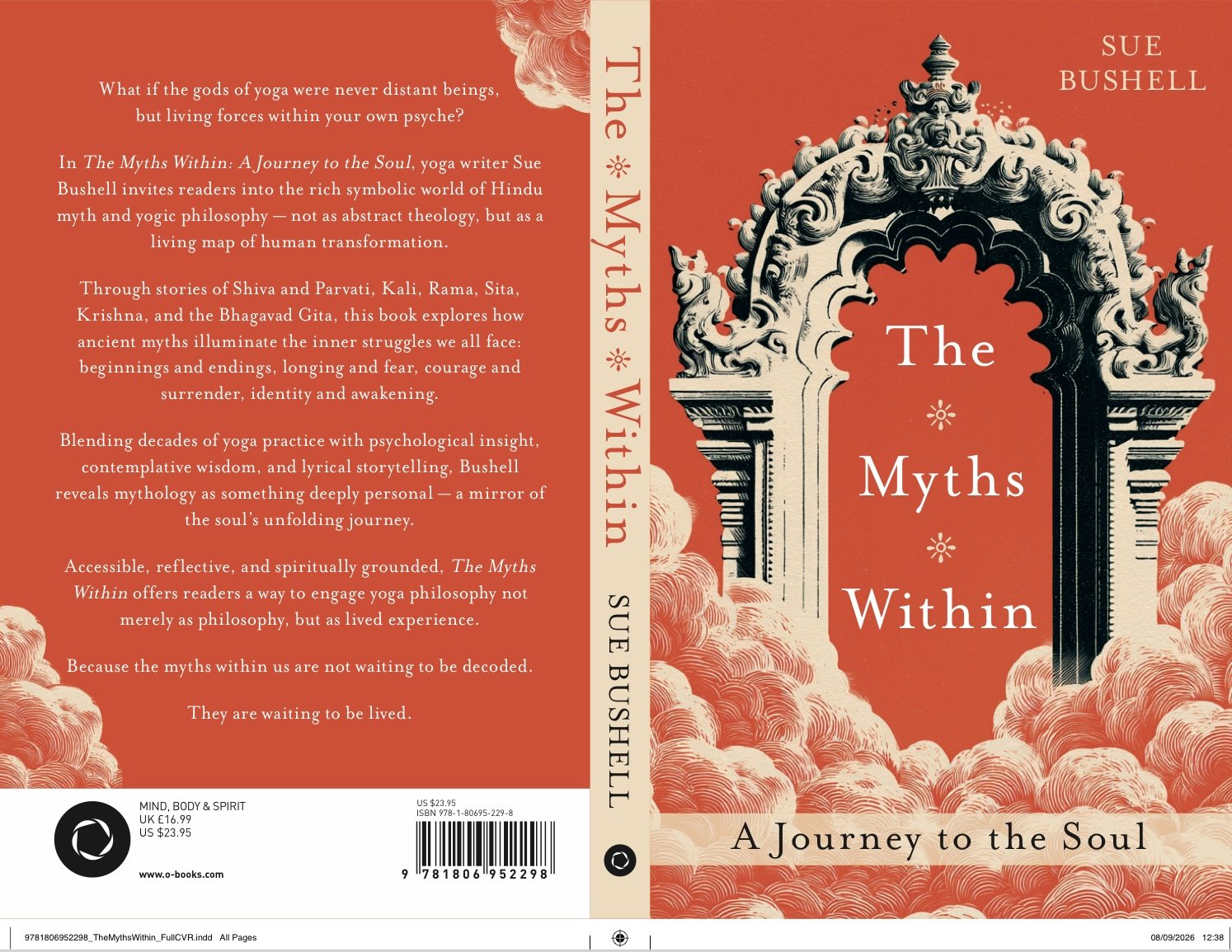
The Myths Within is my next major publication, and I am particularly looking forward to seeing how readers respond to its exploration of mythology as an inner landscape.
I also have a continuing fascination with the relationship between ancient wisdom and the experiences we often find most difficult to articulate: grief, impermanence, identity, ageing and the mysterious transformations that accompany them.
The Mandala Sanctuary remains a living creative space, one that can continue to grow and change without the constraints of a conventional publishing schedule.
But I am also learning something important about allowing work to rest.
After years of writing, creating and developing projects, I feel a growing desire to devote more time to the contemplative practices that inspired them in the first place.
Perhaps that is the next chapter.
Less striving to produce something, and more willingness to listen for what genuinely wants to be written.
Where can readers find you and your work?
Readers can explore my work through The Mandala Sanctuary, and at radiantbliss.yoga, where they will find freely accessible contemplative journeys, meditation practices, yoga philosophy and sacred storytelling.
My first book, Radiant Bliss: A Transformative Yoga Journey for the Modern Soul, is available through booksellers, and my forthcoming book, The Myths Within, will explore the extraordinary psychological and spiritual richness of Hindu mythology.
I also share reflections on yoga, mythology, consciousness and everyday life through Substack and Facebook.
But perhaps the invitation I most want to extend is not simply to read another book or visit another website.
It is to become a little more curious about the life you are already living.
Because the extraordinary may be much closer than we imagine.
Sue Bushell is an award-winning Australian journalist, author, and certified yoga and meditation teacher with more than 30 years of experience exploring the wisdom traditions of India. Her writing, including Radiant Bliss: A Transformative Yoga Journey for the Modern Soul and The Myths Within, brings ancient philosophy and sacred mythology into conversation with modern life, inviting readers to discover the extraordinary within the ordinary.
Learn more about Sue and her work at Radiant Bliss Yoga.
Thank you, Sue, for this beautiful interview and for the reminders of what a true yoga practice really is all about. The Alive in the Fire community appreciates you sharing your time and wisdom with us. May this conversation inspire you to bring a little more curiosity to your own practice, creative work, and everyday experiences.


Author and yoga teacher Sue Bushell shares how ancient wisdom, Hindu mythology, meditation, and creative practice can help us discover the extraordinary within the ordinary.