

Tips for New Yoga Teachers (How to Build Your Confidence Instead of Overthinking Every Class)
/
Let’s talk about something that most yoga teacher trainees don’t think about when they first go to teach classes…
How common it is for new yoga teachers to feel terrified, overwhelmed, underprepared, and afraid of embarrassing themselves.
There’s a huge transition that happens between completing your first 200-hour yoga teacher training and actually feeling confident to teach. (Ask me how I know!!)
And there aren’t a lot of resources out there for this period of uncertainty and overwhelm.
I can’t tell you how many times I felt this way or said this to myself as a brand new yoga teacher:
I’m scared I’ll forget what to say. (And then I often did, in the middle of class!)
I’m worried that students won’t come back. (I took it personally when class numbers fluctuated or dwindled, even though it wasn’t about me.)
What if my class attendance sizes are small and the studio owner lets me go? (A valid fear, especially if there are quotas you have to meet in order to keep a class.)
What if students are bored or don’t like my classes? (Definitely found myself wondering this.)
I have no idea if I’m teaching this pose correctly. (This would come up especially with my least favorite poses or ones I tended to avoid in my practice.)
I’m worried my classes seem dull or overly repetitive. (Did it matter if I was teaching the same or similar classes over and over? I wasn’t sure!)
I just don’t feel confident in myself yet. (Big one.)
I get scared sometimes being at the front of the room to teach. (Introvert here!)
Will the students realize I feel like a fraud? (This was a teeny tiny whisper in my head for such a long time!)

As a new yoga teacher in your first year of teaching, you’ve likely faced:
Imposter syndrome
Overthinking
Overwhelm thinking about how to sequence your class
Anxiety over what to say when you cue poses
Comparison to other teachers
Fear that students won’t return
Freezing or forgetting things during class
Nervous system dysregulation before teaching
If any of that sounds familiar, you are not alone.
This is the experience of almost every new yoga teacher. And it makes sense — teacher training prepares you for the philosophy, anatomy, and practice of yoga, but it doesn't always prepare you for the very real, very vulnerable experience of standing at the front of a room and leading a group of people through a sequence you've created from scratch.
So what actually helps?

10 Tips for Becoming Confident as a Brand New Yoga Teacher
Let yourself be a beginner. You are not supposed to sound like the teachers you admire yet!! Every experienced yoga teacher was once awkward, nervous, and figuring it out as they went.
Teach more often, even when you feel nervous. Confidence is built through repetition, not perfection. The more classes you teach, the safer teaching begins to feel in your body and nervous system.
Stop trying to sound “impressive.” Students usually connect more with authenticity, steadiness, and warmth than perfectly polished cueing. Simple is good. Simple is better when you’re new. Instead of getting overly fancy with your sequencing and cueing, just master a basic class. This is actually of huge benefit to your newer students, too. They may feel overwhelmed, so simplifying things will help them feel more comfortable too.
Remember that students are not analyzing you the way you analyze yourself. Most students are focused on their own practice, their breathing, and how they feel in class, not whether you forgot one cue or stumbled over your words.
Practice your cues out loud at home. Teaching yoga is a verbal skill. The more you physically practice speaking the language of yoga, the more natural it becomes. Recognize too that you have unique little ways of doing things that will make your classes beautiful. Trust the way you like to guide and lead a class. Know that it doesn’t have to be perfect. But keep practicing.
Focus on helping people feel safe, not on being perfect. You do not need the most creative sequence in the world to be a good teacher. Students remember how grounded, supported, and welcomed they felt in your class.
Avoid comparing yourself to senior teachers. This is a tough one! But worth trying. Remember, you are watching people who may have taught hundreds or thousands of classes already. Comparison will make you forget how much you're learning and growing.
Expect awkward moments. You will forget things. You might blank mid-sentence. You may teach a class that feels messy. This is not failure! It’s simply part of becoming a teacher. If it helps, write down the things you did well and the things you struggled with after each class. This can be a great way to focus your energy not only on mistakes but also your STRENGTHS. And you do have strengths already, even if it doesn’t feel like it! Your brain may just be overly focused on your struggles and you need to train it to notice the good things, too.
Find tools and support that make teaching easier. Using yoga scripts, sequencing templates, workshops, mentorship, or practice teaching groups doesn’t make you less qualified. Those things are actually smart strategies to get more confident more quickly. Support helps you grow faster.
Keep reconnecting to why you wanted to teach in the first place. Your students do not need a flawless teacher. They need a real human who cares, keeps showing up, and teaches from the heart. Write yourself a note or put a reminder on your phone of this idea. It can really help especially if you’re having anxiety before or after teaching class.

Building Confidence Over Time as a New Yoga Teacher
One thing I wish more yoga teacher trainings talked about is this:
Confidence usually doesn’t come until after you’ve taught a bunch of classes.
For some of us, that means months. For some of us, it’s years!
Most new yoga teachers assume they’ll feel ready before they start teaching. And some wait to feel confident before committing to teaching a class… and sadly never end up teaching!
In reality, confidence is often something that develops because you keep showing up to teach while feeling nervous, uncertain, and vulnerable.
That can be deeply uncomfortable.
Especially if you're someone who tends to overthink, compare yourself to others, put pressure on yourself to do things perfectly, or struggle with being seen.
Teaching yoga asks you to be visible.
To use your voice.
To take up space in a room.
To trust yourself in front of other people before you fully feel ready.
And honestly? That’s a huge emotional leap for many people.
I think a lot of new yoga teachers believe their anxiety means they’re not cut out for teaching. But often, it simply means they care deeply and are stretching beyond their comfort zone.
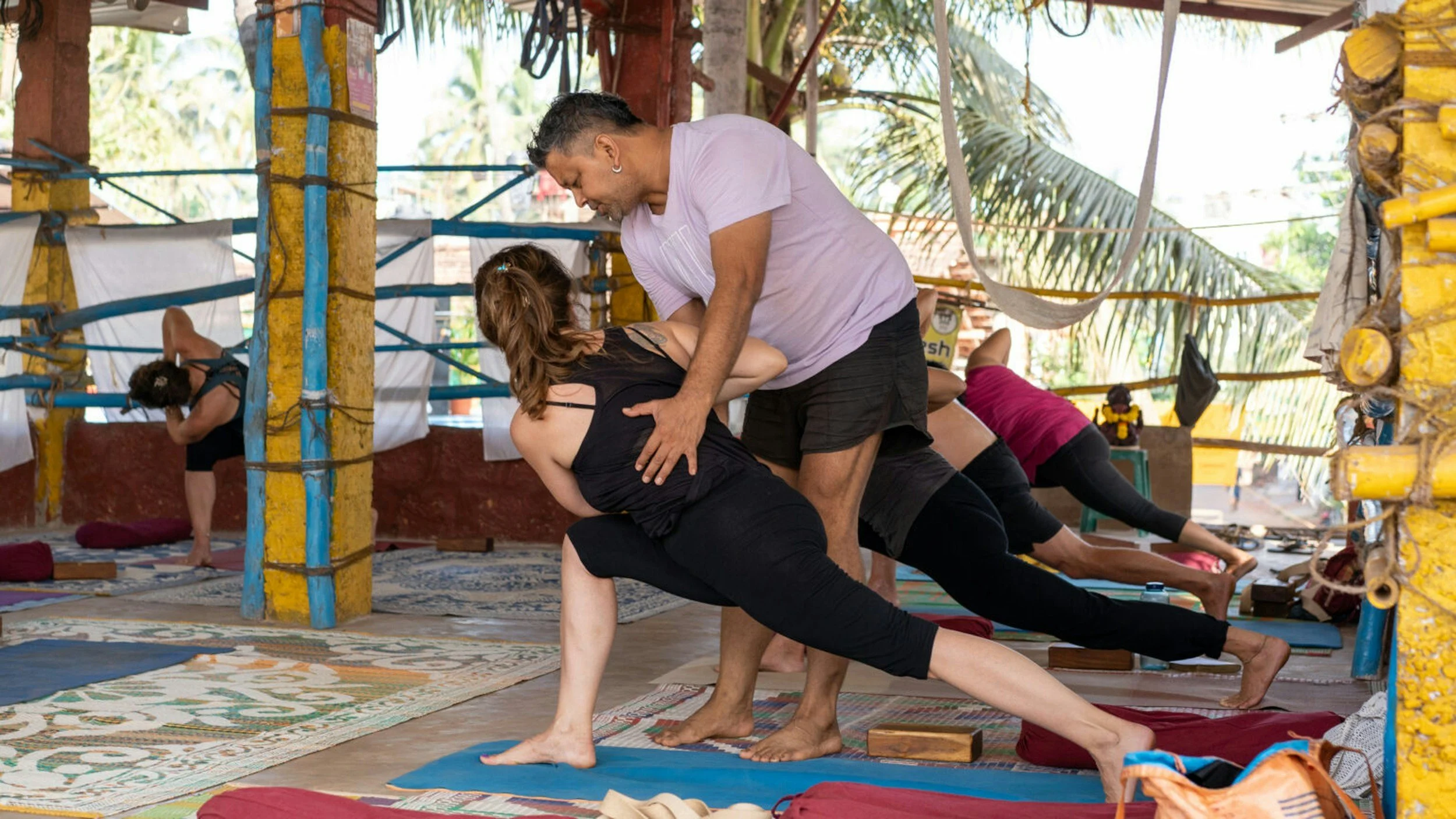
A Confidence Gap for Yoga Teachers That We Need to Talk About
After your 200-hour training, you will have a lot of new information. But that information isn’t quite embodied knowledge yet.
You haven’t yet watched students during 50 or 100 different classes and seen firsthand how your words are landing with people.
Cueing takes practice to find out how much to say, at what pace to say it, and how to modify cues depending on who shows up for class (the difference between teaching beginners or more advanced students, for example).
One aspect of teaching yoga that new yoga teachers often don't have yet is the language—the specific, reliable verbal cues that help students understand how to move their bodies safely, feel guided and supported, and trust you as their teacher.
Or maybe you have the language from other teachers you admire and how they teach… but you go to try out that language in your own voice and it just feels clunky or doesn’t fit.
This is where you’ve got to get some reps in, more classes under your belt.
Over time, you’ll build a sense of trust in your own voice and the way you like to say things.
Building that language takes time. But there's a tool that can shortcut the process significantly: a yoga teaching script.

What Is a Yoga Teaching Script?
A yoga class script is a written guide that gives you the exact words to say when teaching — from how to open class, to how to cue students safely in and out of poses, to how to close with a grounding meditation or savasana script.
Think of it like a map for your class. You don't have to follow it word for word forever. But when you're new, it gives you a route so you're not driving in circles, second-guessing every turn.
A good yoga teaching script PDF includes:
Pose-by-pose verbal cues so you know exactly what to say (and in what order)
Opening and closing scripts so class feels intentional from start to finish
Savasana and meditation scripts to guide students into deep rest
Safety language to help students modify or use props
Sequencing frameworks so your classes have a clear arc
Is Using a Yoga Script "Cheating"?
This is one of the most common questions new teachers ask — and while some people might not resonate with using a yoga script as a tool, I think it’s an incredible resource.
It’s kind of like having your training wheels on when learning to ride a bike. They’re there to keep you safe. They’re not meant to stay on forever. But for some, without the training wheels, you’d never learn to ride at all.
Using a yoga class script doesn't make you less of a teacher. It makes you a more prepared teacher. Every profession has templates, frameworks, and models that practitioners learn from before finding their own voice. Lawyers use brief templates. Writers use outlines. Therapists learn scripted interventions before adapting them.
Yoga teaching is no different.
Using a script, especially in your first year, means your students get clearer cues, safer instruction, and a more grounded experience. You get to focus your energy on being present in the room rather than frantically trying to remember what comes next.
And it’s not like you’re standing in front of the room reading from a piece of paper. The script is meant to be a resource you can use before and after class or when practice teaching a friend, rather than when actually teaching at the studio or gym.
Over time, the language becomes yours. You internalize it, adapt it, and make it personal. The script becomes a launching pad, not a crutch.
How a Yoga Teaching Script Helps with Imposter Syndrome
One of the biggest sources of imposter syndrome for new yoga teachers is the fear of not having the right words. When you blank mid-class or trail off mid-cue, it rattles your confidence and can send you into a spiral of self-doubt that's hard to recover from in the moment.
A yoga teaching script solves this at the root. When you've read through the script, practiced with it, and internalized the flow, you walk into class knowing you have a plan. That preparedness creates a nervous system shift. Instead of bracing for what might go wrong, you're grounded in what you know.
Many teachers describe it as moving from reactive teaching (scrambling in the moment) to responsive teaching (making real-time decisions from a place of steadiness).
What to Look for in a Yoga Class Script PDF
If you’re looking for a yoga class script, here are some elements to check for:
Complete class structure. A good script covers the full arc of class—and that includes the warm-up, peak poses, cool-down, and savasana. Look for scripts that mirror the style you want to teach, whether that's power vinyasa, hatha, restorative, or yin.
Clear, body-positive cueing language. The best scripts use inclusive, accessible language that works for a wide range of bodies and experience levels. Avoid scripts with overly prescriptive language that assumes everyone's body moves the same way.
Savasana and closing meditation options. Closing a yoga class well is an art. A script that includes multiple savasana meditation scripts and closing yoga class options gives you flexibility depending on the energy of the room.
Sanskrit integration (optional but valuable). If you want to teach with Sanskrit posture names, look for a script that includes pronunciation guides alongside the English cues.
Bonus tools for new teachers. The best yoga teaching resources go beyond the script itself — including sequencing worksheets, cueing formulas, and reflection prompts that help you grow as a teacher over time.
Which Yoga Script Is Right for You?
Here's a quick guide to some of the yoga scripts available here:
Teaching a vigorous, upbeat flow? → The Power Yoga Script is your go-to, with full cueing for a dynamic vinyasa class.
Want to incorporate Sanskrit? → The Power Yoga Script with Sanskrit Posture Names includes pronunciations and English cues side by side.
Want a guided meditation at the end of class? → The Grounding Power Yoga Script with Savasana Meditations gives you a full flow plus multiple closing meditation options.
Teaching a gentler or restorative class? → The Restorative Yoga Script with Savasana Meditations is designed for slower-paced, nourishing classes.
Looking for deep relaxation guidance? → The Yoga Nidra Script walks you through a full yoga meditation script for guiding students into complete rest.
Want the best value and the most flexibility? → The 6-Script Bundle includes all of the above plus bonus tools for planning any style of class — 140+ pages for new and experienced teachers alike.
What New Yoga Teachers Are Saying About Alive in the Fire Yoga Scripts
"Teaching has been so incredible and empowering. It's hard to believe it's been almost two years since I started teaching. I feel so confident as a yoga teacher now, and I cannot thank you enough for your yoga scripts. They truly gave me the confidence I needed as a beginner yoga teacher and set me up for success." — Madison, yoga teacher in Texas
"Your scripts have helped so much. So many parts of teaching yoga are getting easier. I'm forever growing." — Chloe W., yoga teacher in Australia
"Thank you! I love your resources! They really helped ingrain things in my memory after my teacher training!" — Angele, yoga teacher in Wisconsin
Your First Year of Teaching Doesn't Have to Feel So Hard
The transition from yoga student to yoga teacher is real. It takes time, repetition, and a lot of grace with yourself. But you don't have to white-knuckle your way through your first year hoping confidence eventually shows up.
A yoga teaching script gives you something to stand on while you find your footing. It's not about following a formula forever… but rather, it's about having support while you build the skills, the language, and the trust in yourself that makes teaching feel like the gift it's supposed to be.
You completed your training for a reason. Your students need what you have to offer.
Let's get you in front of your next class feeling confident, grounded, and ready.
Browse the full collection of yoga class scripts and teaching resources at Alive in the Fire Yoga Scripts.




My newest mission? To find the best fall coffee drinks in Salt Lake City. Join me for our first stop: Alpha Coffee!